India is undergoing a massive environmental shift. With stringent government regulations banning single-use plastics, businesses and consumers are frantically searching for the best biodegradable products in India.
However, as the market floods with “green” alternatives, a hidden problem has emerged: not all biodegradable products are actually safe for the environment. Many leave behind toxic microplastics that poison our soil and oceans.
If you are a business looking to switch to eco-friendly packaging, you need to understand the crucial difference between standard biodegradable items and 100% compostable products. Here is everything you need to know, and why SAKRT is leading the true sustainable revolution in India.
Understanding Biodegradable Products in India
The Problem with "Oxo-Degradable" Plastics
Because “biodegradable” has no strict time limit attached to it, many manufacturers use it as a greenwashing loophole. They produce “oxo-degradable” plastics standard plastics mixed with chemical additives that cause them to fragment quickly when exposed to sunlight and oxygen.
While these bags seem to disappear, they are actually just breaking down into millions of invisible microplastics. They do not return to nature; they simply become harder to clean up.
Biodegradable vs. Compostable: What’s the Difference?
To truly protect the environment and comply with Indian regulations, businesses must move beyond generic biodegradable products and embrace compostable solutions.
Biodegradable (The Broad Term)
- Breaks down naturally, but has no specific timeframe.
- May leave behind toxic chemical residues or microplastics.
- Often lacks strict regulatory certification.
Compostable (The Gold Standard)
- Breaks down completely into nutrient-rich biomass (compost), water, and carbon dioxide.
- Leaves zero toxic residue and zero microplastics behind.
- Breaks down within a specific timeframe (usually 180 days in a composting environment).
- Must pass rigorous testing (like CPCB certification in India).
Every compostable product is biodegradable, but not every biodegradable product is compostable.
SAKRT: Leading the Shift to 100% Compostable Products
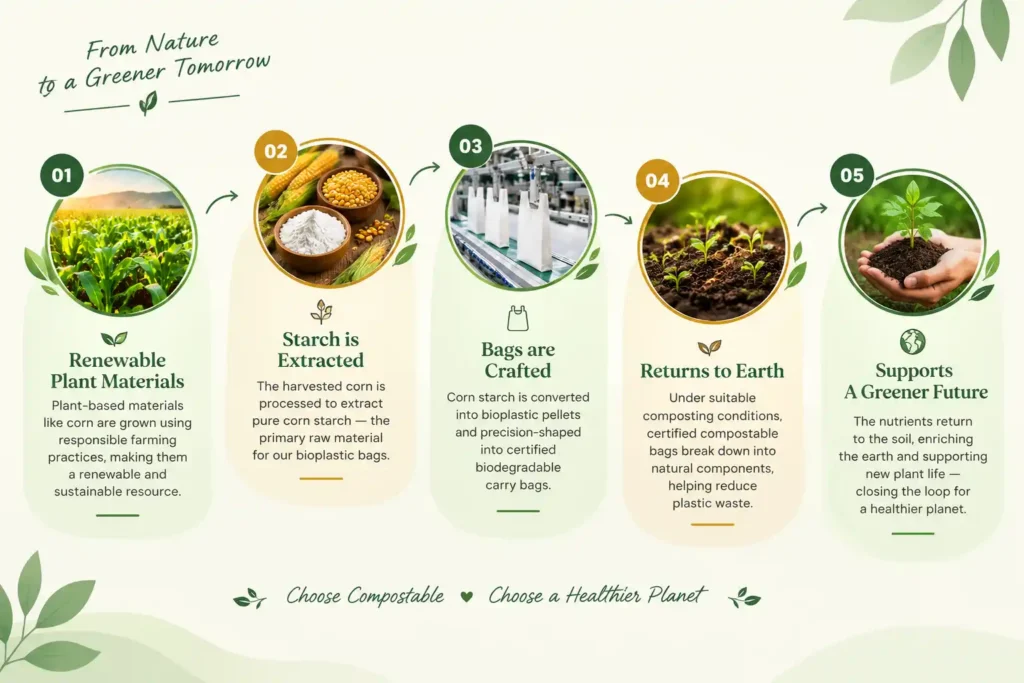
At SAKRT, we recognized the flaw in India’s biodegradable market. That is why we exclusively manufacture 100% compostable alternatives to single-use plastics. Derived from natural plant starches and biopolymers, our products offer the strength of traditional plastic without the environmental guilt.
Our Range of Eco-Friendly Solutions
Whether you run a local retail shop in Mangaluru or a pan-India e-commerce brand, SAKRT provides government-compliant sustainable packaging:
1. Compostable Carry & Grocery Bags
Perfect for supermarkets, apparel stores, and local vendors, our carry bags boast high tear resistance and excellent load-bearing capacity. They look and feel premium but return to the earth in under six months.
2. Heavy-Duty Garbage Bags
Waste management is a critical issue in India. Our compostable trash liners ensure that organic waste can be processed directly into compost without needing to be separated from a toxic plastic bag.
3. E-commerce Mailer Bags
The e-commerce boom has led to massive plastic pollution. SAKRT’s tamper-proof compostable mailers allow digital brands to ship products securely while aligning with eco-conscious consumer values.
Why Indian Businesses Are Choosing SAKRT
Switching to SAKRT isn’t just about saving the planet it’s about smart business.
CPCB Certified and Compliant
The Central Pollution Control Board (CPCB) of India has strict guidelines regarding plastic alternatives. All SAKRT products are heavily tested and CPCB-certified, ensuring your business is 100% compliant with state and national plastic bans. You get peace of mind, knowing you will never face fines for non-compliance.
Make the Switch Today
The future of packaging in India isn’t just biodegradable, it is compostable. By choosing SAKRT, you are investing in a zero-microplastic future.
SAKRT – A Brand of Envirly Innovations Pvt Ltd
Ready to Go Green?
Join hundreds of businesses making the switch to eco-friendly packaging solutions.