Table of content
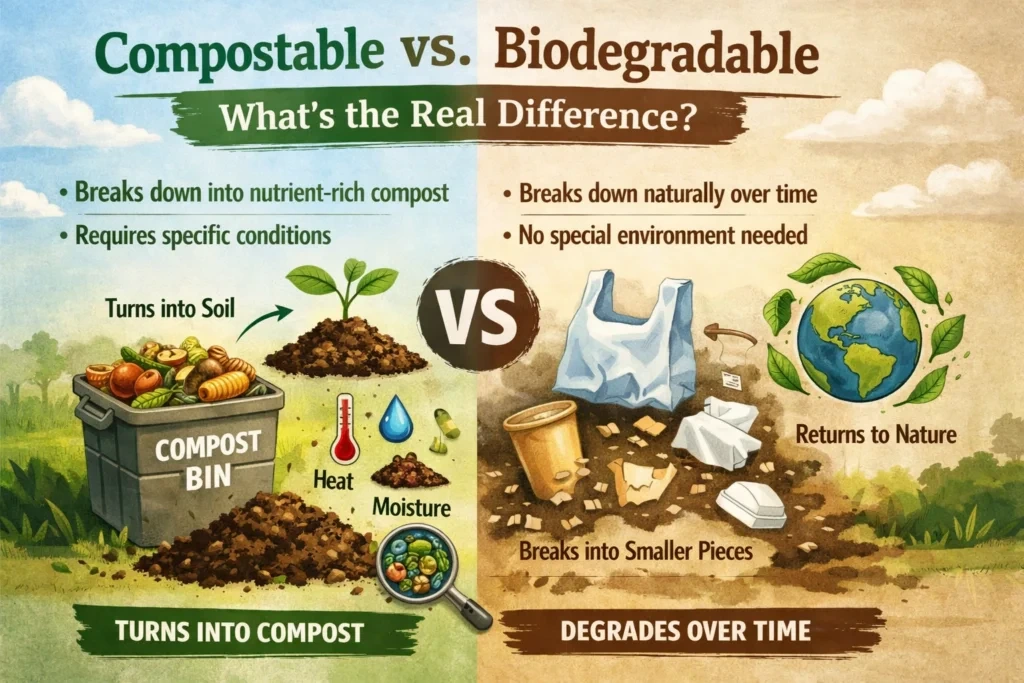
Lots of people assume “biodegradable” and “compostable” mean the exact same thing, but there is a crucial difference in the materials used and how they break down in the environment.
Biodegradable refers to products that can break down naturally over time through microorganisms, but without any guaranteed timeframe or environmental conditions.
Compostable, on the other hand, refers to products made specifically from natural, plant-based materials engineered to remain durable during use, then break down completely within a defined period (typically within six months) to enrich the soil as natural manure.
While all compostable material is biodegradable, not all biodegradable material is compostable. Understanding the difference is crucial to avoiding “greenwashing” and ensuring your packaging actually helps the environment.
True compostable packaging is engineered strictly from renewable, non-petroleum organic feedstocks such as cornstarch polymers (PLA), PBAT, and sugarcane bagasse.
What Does "Biodegradable" Actually Mean?
Biodegradable materials possess the natural ability to break down over time. According to industry standards, certified items are designed to decompose completely within six months of use. Certain biodegradable materials convert into rich organic compost, enhancing soil fertility and promoting healthy plant development.
Furthermore, this compost nurtures beneficial microorganisms, which form the essential foundation of healthy, nutrient-rich soil.
What Does "Compostable" Mean?
Compostable products take eco-friendliness a critical step further. For a product to be certified as compostable, it must break down into natural, non-toxic elements (water, carbon dioxide, and biomass) at a specific rate usually within 90 to 180 days.
More importantly, compostable items leave absolutely zero toxic residue or microplastics behind. They turn into nutrient-rich compost that actually benefits the soil.
Industrial vs. Home Composting
- Industrial Composting: Some compostable items require the high heat (usually over 55°C) and managed conditions of a commercial composting facility to break down effectively.
- Home Composting: Other items can break down right in your backyard compost bin at ambient temperatures. (Note: SAKRT’s products are designed for safe, natural decomposition).
The Key Differences at a Glance
Feature | Biodegradable | Compostable |
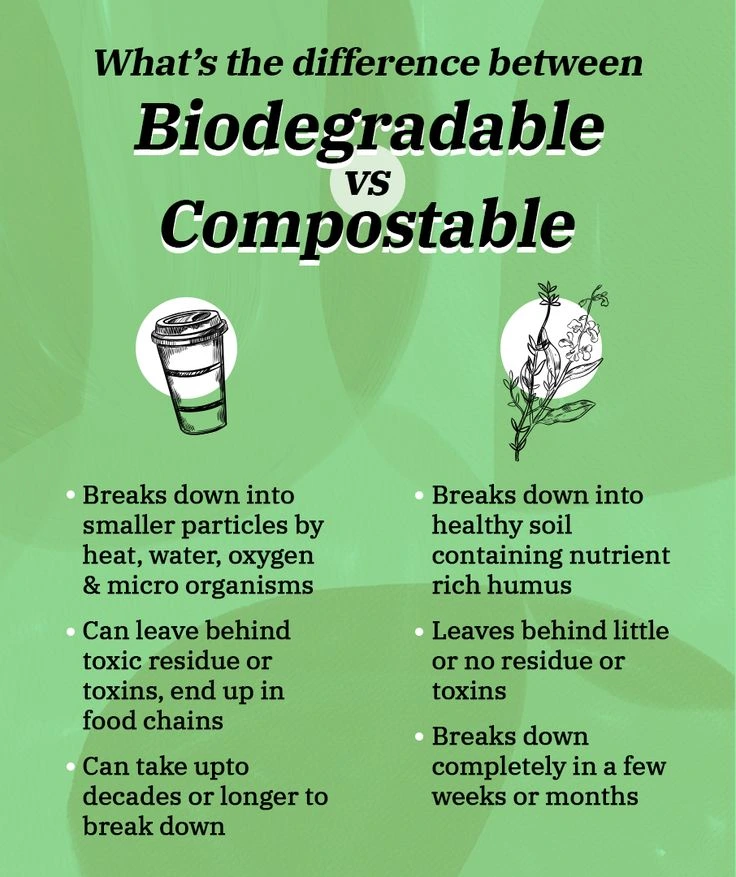
Timeframe to Break Down | Undefined (can take years/decades) | Regulated (usually 90-180 days) |
Toxic Residue | May leave behind microplastics/toxins | Leaves zero toxic residue |
End Result | Smaller pieces of the original material | Nutrient-rich soil/biomass |
Certifications | Rarely strictly regulated | Highly regulated (e.g., CPCB certification) |
The Problem with "Greenwashing"
Greenwashing has become a critical environmental challenge, masking the true impact of human activity on our planet. Massive emissions of methane and carbon dioxide continue to trap heat and pollutants, blanketing the Earth in dense smog. While many consumers strive to adopt sustainable habits, making an absolute transition remains difficult. Exploiting this demand, certain manufacturers misleadingly market conventional plastics formulated with chemical additives as ‘biodegradable’ commonly known as oxo-degradable plastics. In reality, these materials merely fragment into microplastics at an accelerated rate, causing severe and lasting damage to marine ecosystems and soil biology.
When choosing sustainable packaging, always look for certified compostable labels rather than vague “biodegradable” claims
Biodegradable and compostable. Which is better?
Without a doubt, both the materials are made to decompose in the nature where compostable products are the superior choice for the environment. Because they are heavily regulated by bodies like the Central Pollution Control Board (CPCB) in India, you are guaranteed that the product will safely return to the earth without harming ecosystems.
How SAKRT is Leading the Change
At SAKRT, we don’t deal in vague promises. We manufacture 100% plant-based, CPCB-certified compostable packaging solutions. From grocery bags to e-commerce mailers, our products are engineered to provide the durability of traditional plastics but will completely decompose within 180 days, leaving nothing behind but healthy soil.
SAKRT – A Brand of Envirly Innovations Pvt Ltd
Ready to Go Green?
Join hundreds of businesses making the switch to eco-friendly packaging solutions.