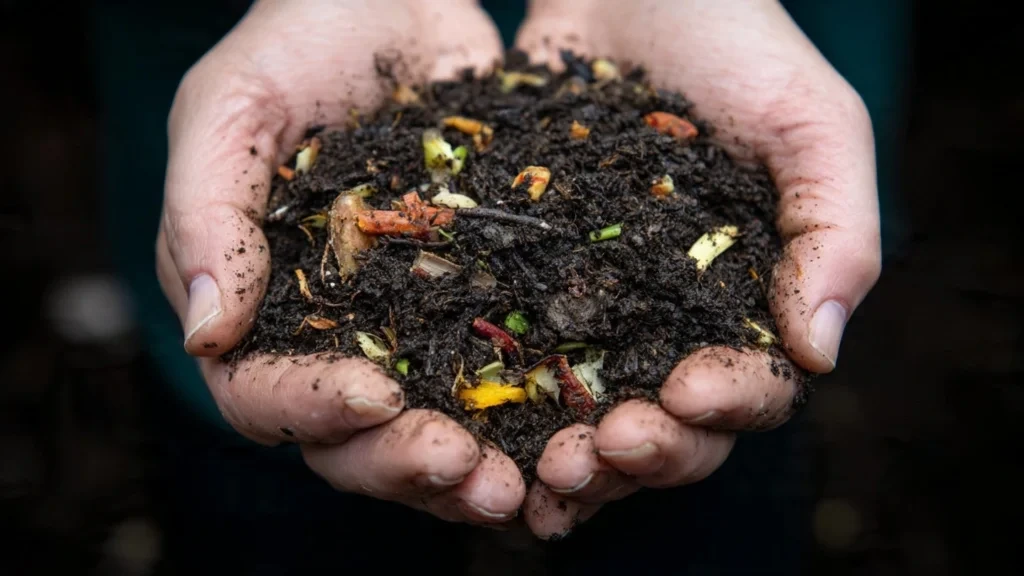
Have you ever wondered how organic waste, fallen leaves, and plant-based packaging transform into rich, dark, fertile soil? The answer lies beneath the surface in a unseen biological engine powered by billions of microorganisms.
Microbes are the unsung heroes of ecological waste management. Without them, organic matter would simply accumulate without returning essential nutrients to the earth.
Role of microbes in composting bioplastics
In this comprehensive guide, we examine the role of microbes in composting, explore the specific biological stages of breakdown, and reveal how these natural decomposers digest certified compostable packaging like SAKRT’s plant-based carry bags and compostable mailers.
How Microorganisms Drive the Composting Process
The Primary Decomposers in Compost
The composting microbial ecosystem consists of four main groups:
1. Bacteria
Bacteria make up 80% to 90% of all microbes found in a compost pile. They are the first responders that consume easily accessible carbohydrates, starches, and proteins, generating thermal energy that elevates pile temperatures.
2. Actinomycetes
Actinomycetes are higher-order bacteria that grow as white, thread-like filaments. They take over during the middle and final stages to break down complex, tough materials like chitin, bark, and lignocellulose. They give mature compost its rich, earthy scent.
3. Fungi
Molds and yeast process complex carbon structures that bacteria cannot digest. Fungi remain active in cooler outer regions of the pile and during the final curing phase.
4. Protozoa & Micro-Fauna
Microscopic single-celled animals consume bacteria and fungi, releasing excess nitrogen into the pile in plant-available forms.
The 4 Stages of Microbial Decomposition
Microbial activity during composting occurs across distinct temperature-dependent phases
1. The Mesophilic Phase (20°C to 40°C)
Moderate-temperature bacteria initiate decomposition by breaking down simple soluble compounds like sugars and starches. As metabolic activity accelerates, heat builds up rapidly within the matrix.
2. The Thermophilic Phase (40°C to 65°C)
Heat-tolerant thermophilic bacteria take over. This high-temperature phase is vital because it neutralizes weed seeds, inactivates plant pathogens, and accelerates the degradation of complex organic polymers.
3. The Cooling Phase
As easily digestible food sources deplete, internal temperatures drop. Fungi and actinomycetes recolonize the center of the pile to consume remaining fibrous materials.
4. The Maturation / Curing Phase
Microbial activity stabilizes. The remaining matter humifies, resulting in a nutrient-rich soil conditioner safe for agricultural application.
How Microbes Decompose Certified Compostable Packaging
A common misconception is that eco-friendly packaging breaks down due to sunlight or water alone. True degradation requires microbial digestion.
Unlike petroleum-based plastics which microorganisms cannot digest CPCB-certified compostable products (such as SAKRT’s carry bags, garbage liners, and mailers) are constructed from natural plant polymers like cornstarch, PLA, and PBAT resins.
The Enzymatic Breakdown Mechanism
- Moisture & Heat Absorption: In a moist composting environment, the biopolymer matrix absorbs water, weakening its structural bonds.
- Enzyme Secretion: Bacteria and fungi recognize the natural carbon chains and secrete extracellular enzymes (such as esterases and depolymerases).
- Bio-Assimilation: The enzymes split complex molecular chains into simple monomers. Microbes consume these monomers as energy, converting them entirely into CO₂, H₂O, and organic biomass within 90 to 180 days.
- Zero Toxic Microplastics: Because microbes consume the material fully, no synthetic microplastic fragments or toxic residues remain in the soil.
Factors That Optimize Microbial Activity in Compost
For microbes to digest organic waste and compostable bags efficiently, four physical factors must be balanced:
- Oxygen (Aeration): Aerobic microbes digest waste 10 to 20 times faster than anaerobic species. Turning the pile regularly prevents foul odors and maintains rapid decomposition.
- Moisture Content: Microbes require a thin film of water around organic particles to migrate and transport enzymes. Target moisture levels should sit between 40% and 60%.
- Carbon-to-Nitrogen (C:N) Ratio: The ideal balance is 30 parts Carbon to 1 part Nitrogen (30:1). Carbon supplies microbial energy, while Nitrogen supports cellular reproduction.
- Temperature: Maintaining industrial composting temperatures between 50°C and 60°C ensures maximum breakdown speed for certified biopolymer packaging.
SAKRT’s Role in Supporting Circular Ecology
Understanding the role of microbes in compost production highlights why shifting to plant-based materials is critical for waste management.
Traditional single-use plastics resist microbial breakdown for centuries, eventually fragmenting into hazardous microplastics. SAKRT manufactures 100% CPCB-certified compostable packaging solutions engineered to work in harmony with natural soil biology.
By replacing traditional polythene with plant-based alternatives, businesses can route their waste away from landfills and into compost systems turning everyday packaging into nutrient-rich soil.
SAKRT – A Brand of Envirly Innovations Pvt Ltd
Ready to Go Green?
Join hundreds of businesses making the switch to eco-friendly packaging solutions.